Mind in the Holographic Field
A Panvibrational Reduction Base for Consciousness
By Edward F Hillenaar, MSc.
June 12, 2022
Introduction
This ontology of mind and consciousness postulates a reduction base by which it can explain how an image of the external world is created and experienced. The panvibrational reduction base explains and formulates which psycho-physical laws are involved (f.e.; Gibson’s invariance laws, optical flow fields, etc.) that explain the generation and perception of a holographic image of external events and happenings in, by and of the human mind.
In this ontology of mind and consciousness, the reduction base is called “Panvibration” and the underlying crucial psycho-physical laws were first formulated by the late psychologist James Gibson and his work on the nature and psycho-physical mechanisms of visual perception (Gibson 1950). The Philosophy of Mind of Henri Bergson (Bergson 1911), (Bergson 1910), (Bergson 1922) also plays a fundamental role in this ontological theory with the ultimate metaphysical goal of solving the “Hard Problem of Consciousness” (Chalmers 1995).
Other references: (Chalmers and Chalmers 1995), (Robert Lawrence Kuhn 2020)
Data
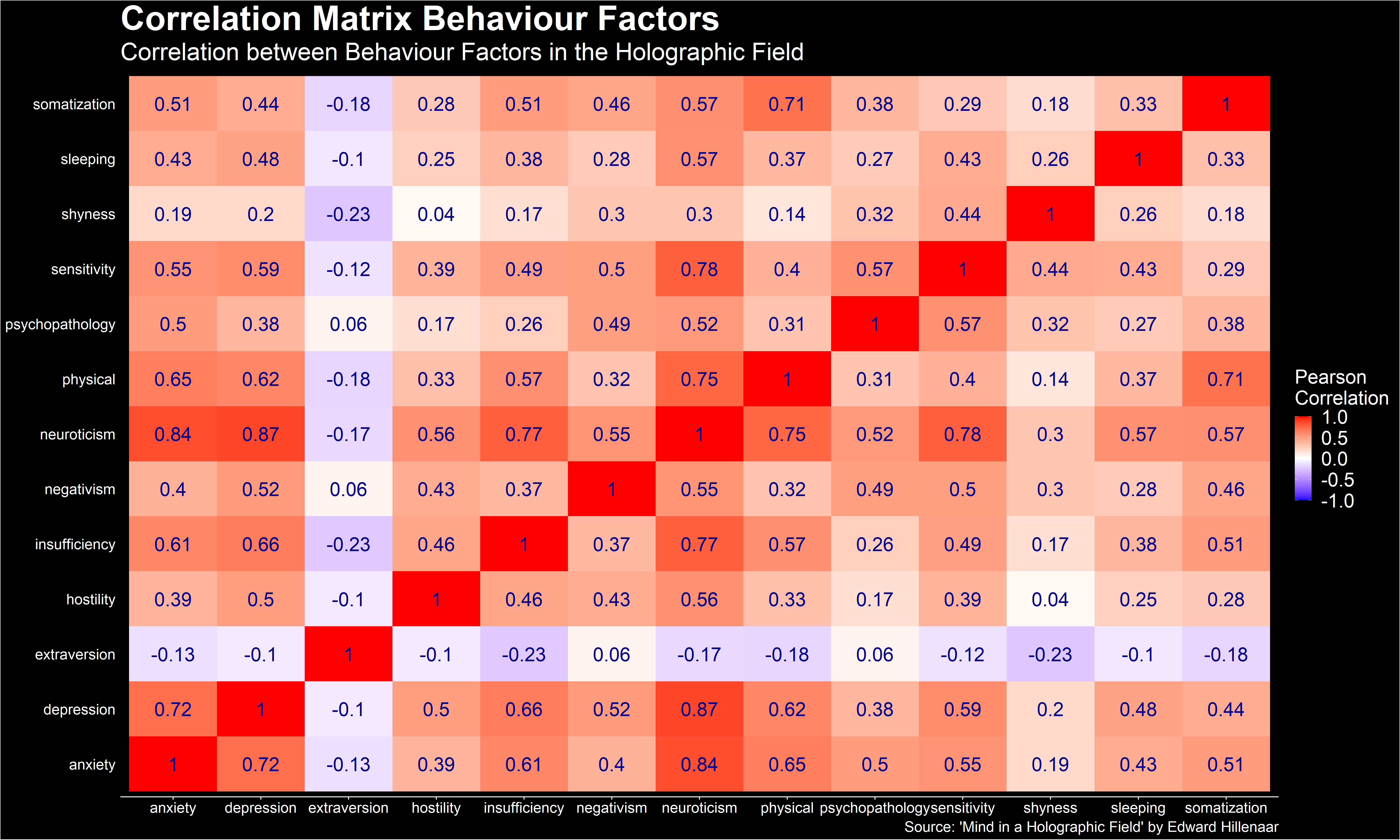
Correlation Matrix of behaviour factors
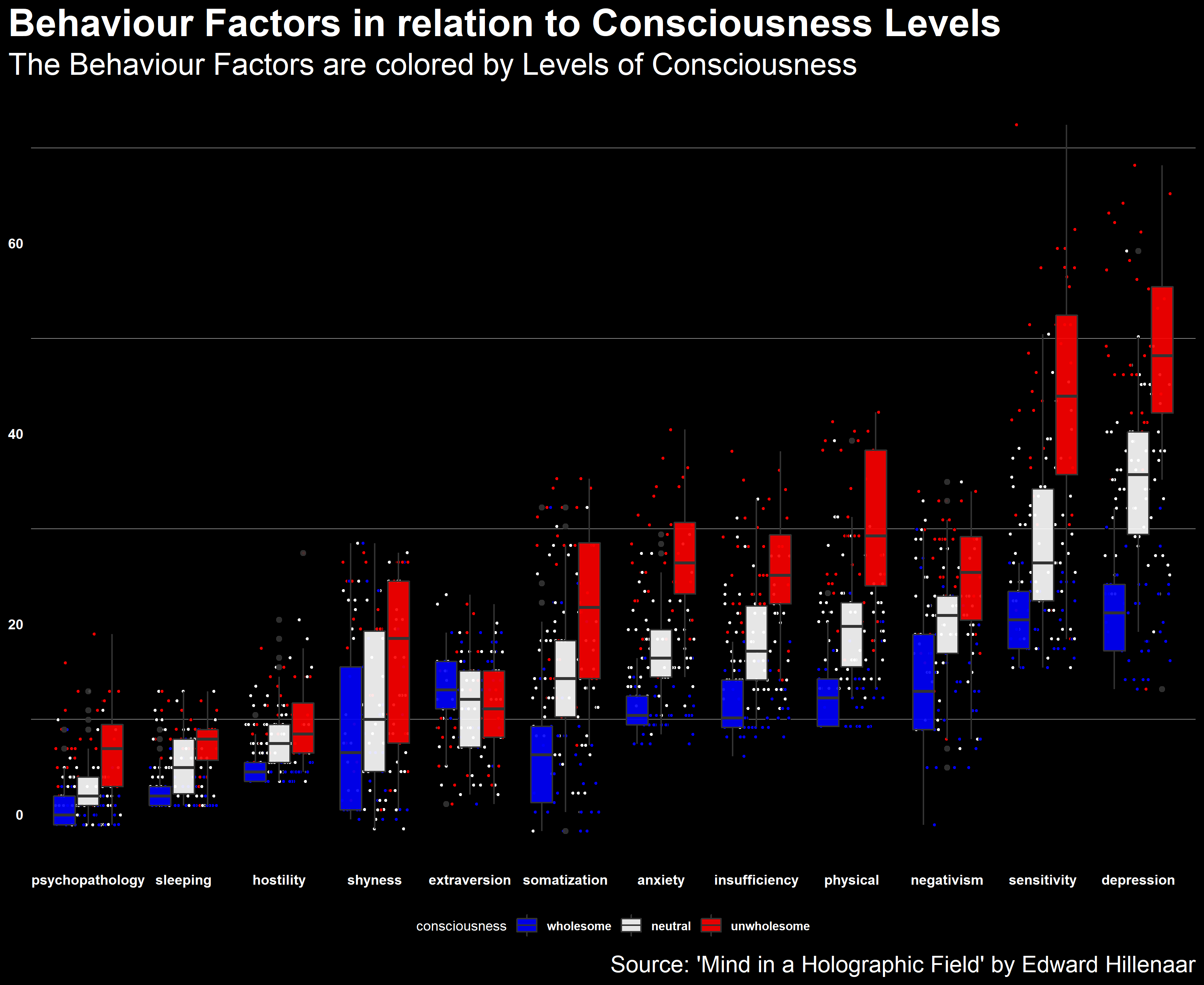
Behaviour Factors in relation to Consciousness Levels
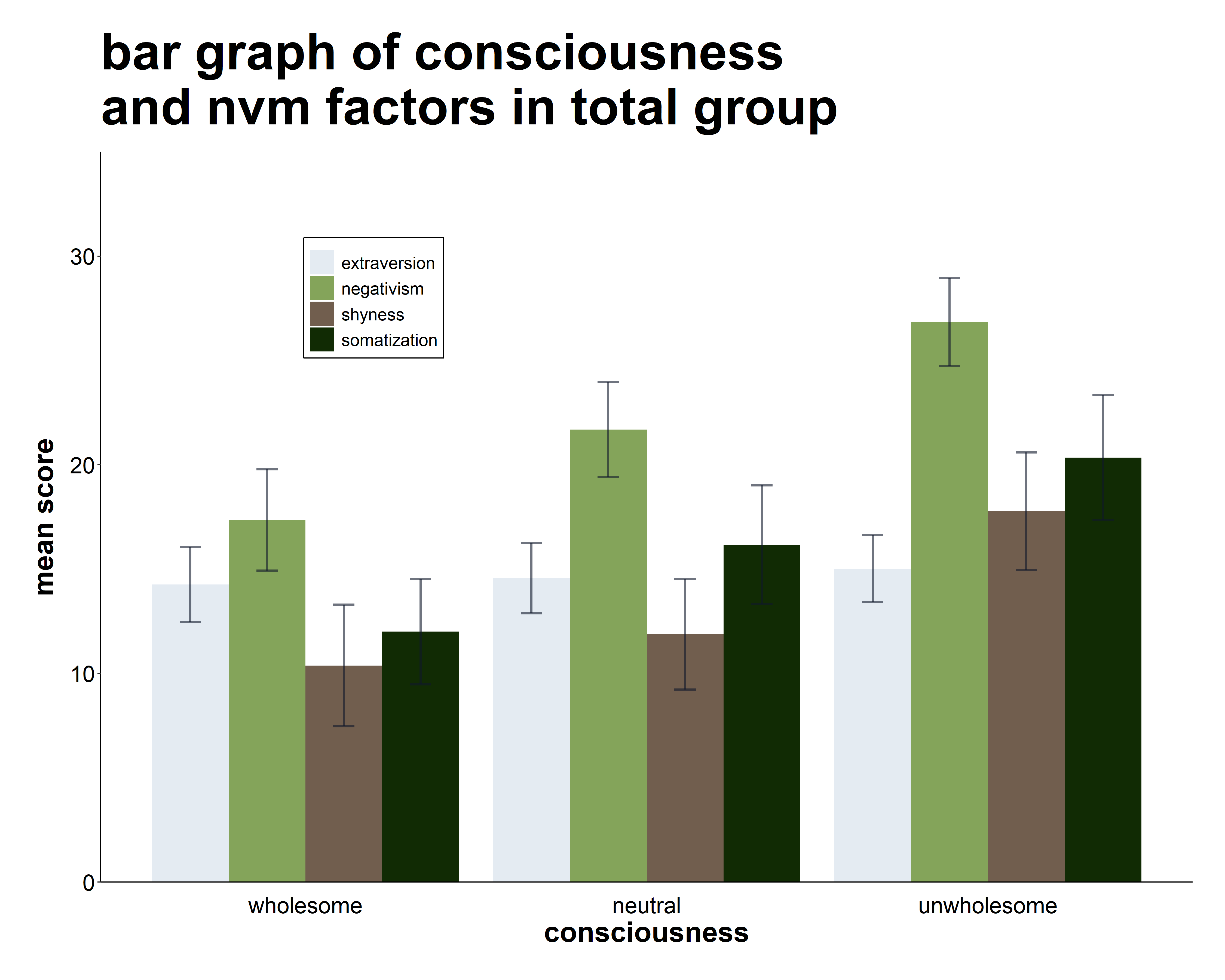
bar graph consciousness and nvm factors in total group
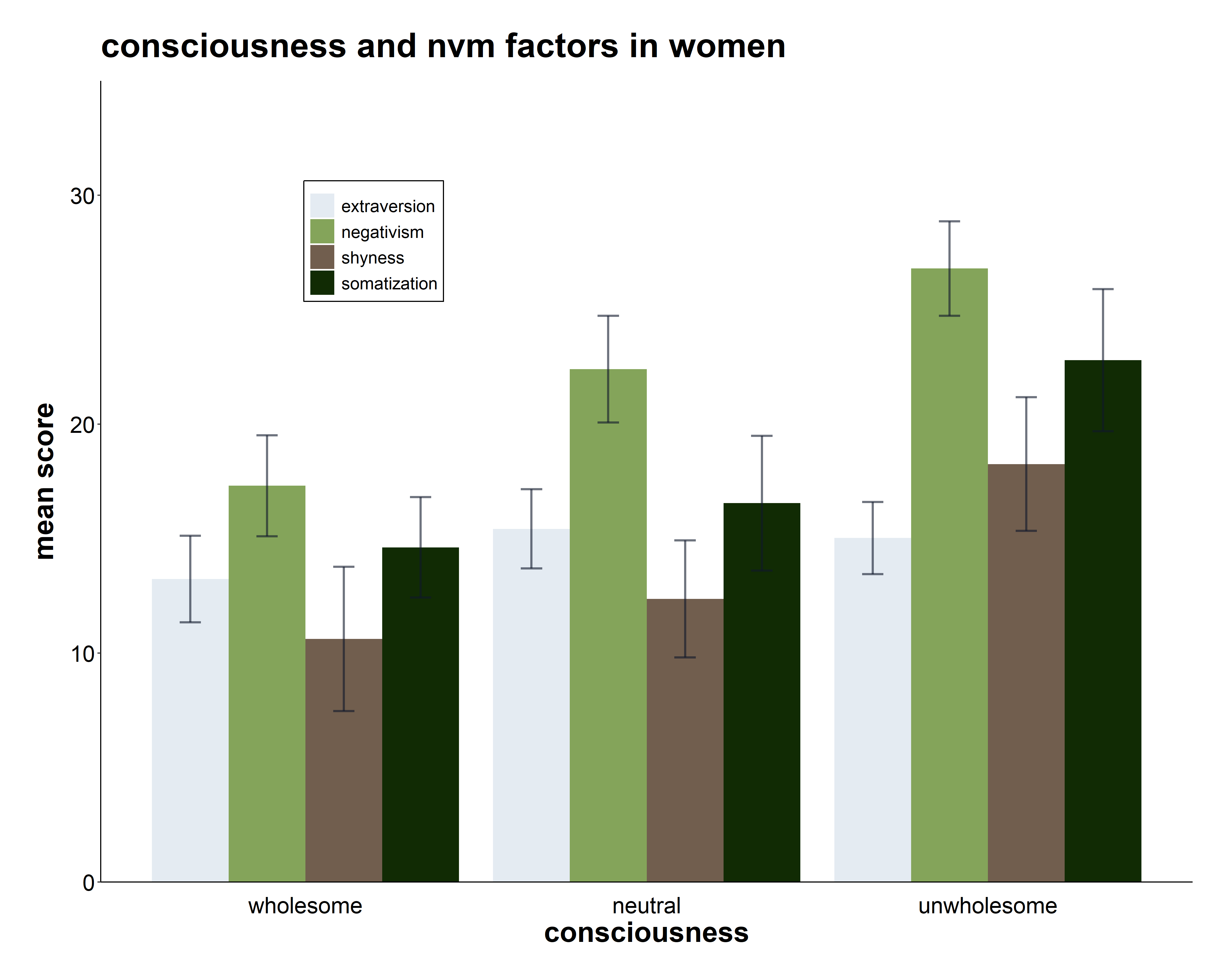
bargraph of consciousness and nvm factors in women
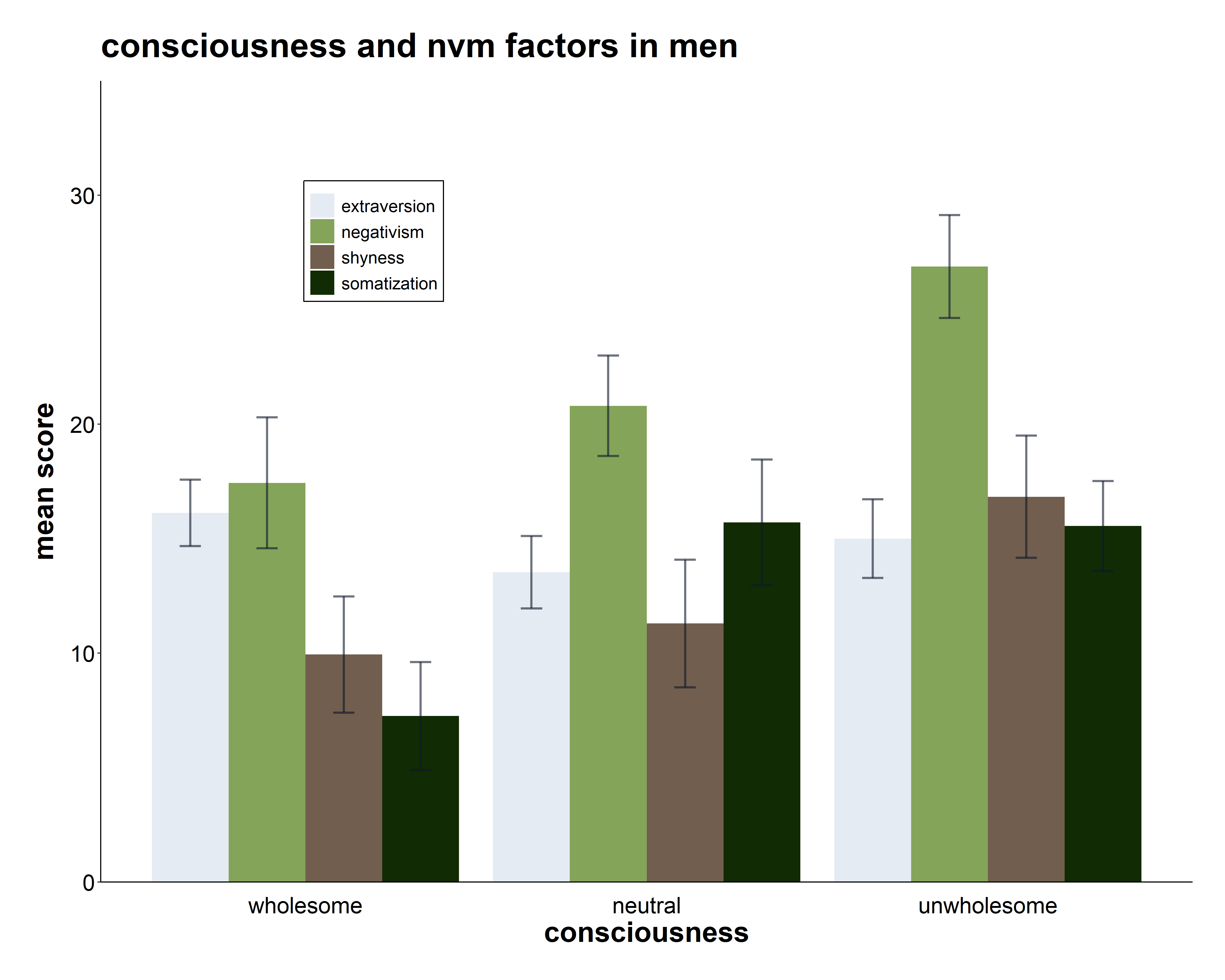
bargraph of consciousness and nvm factors in men
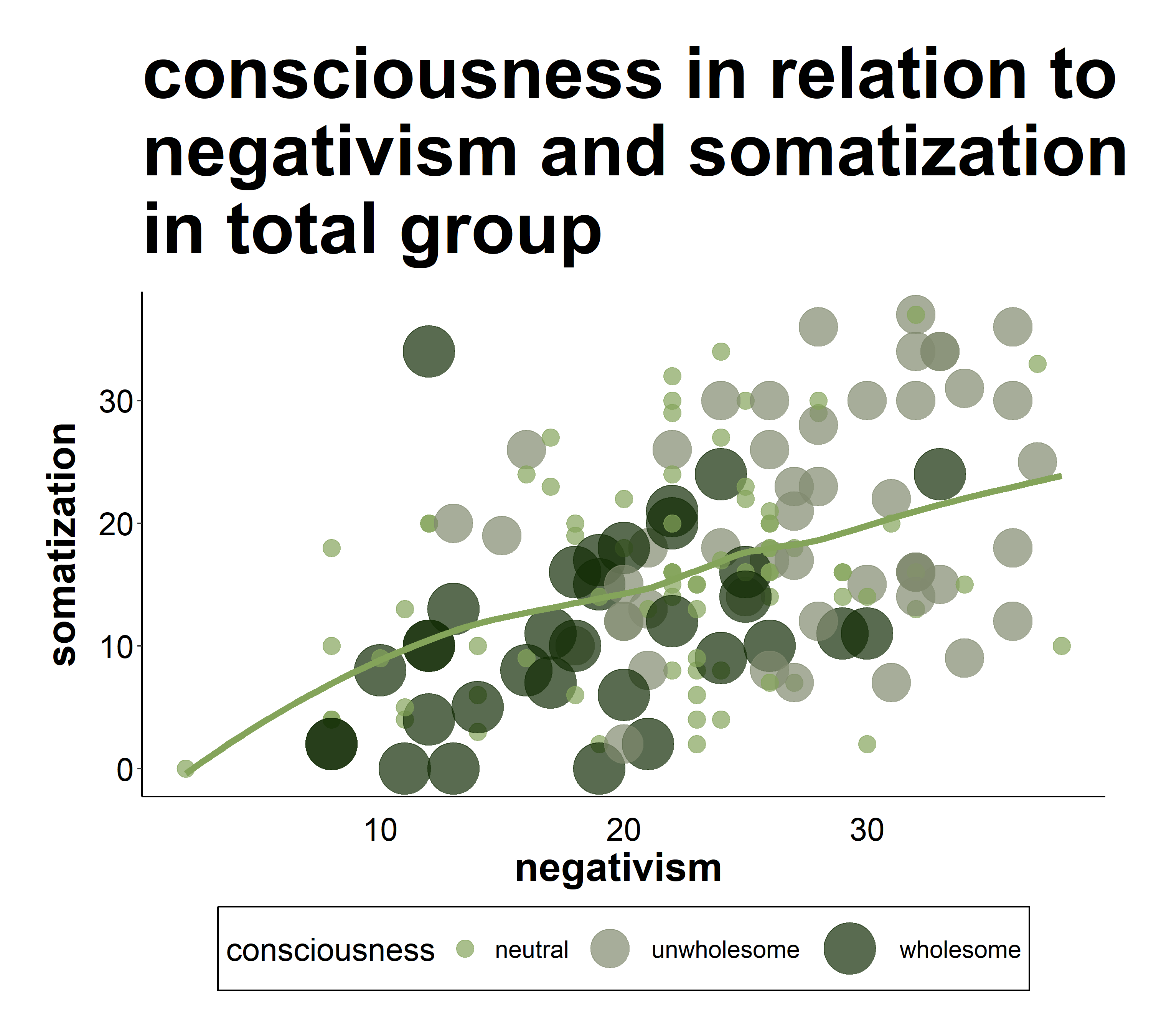
scatterplot consciousness in relation to negativism and somatization in total group
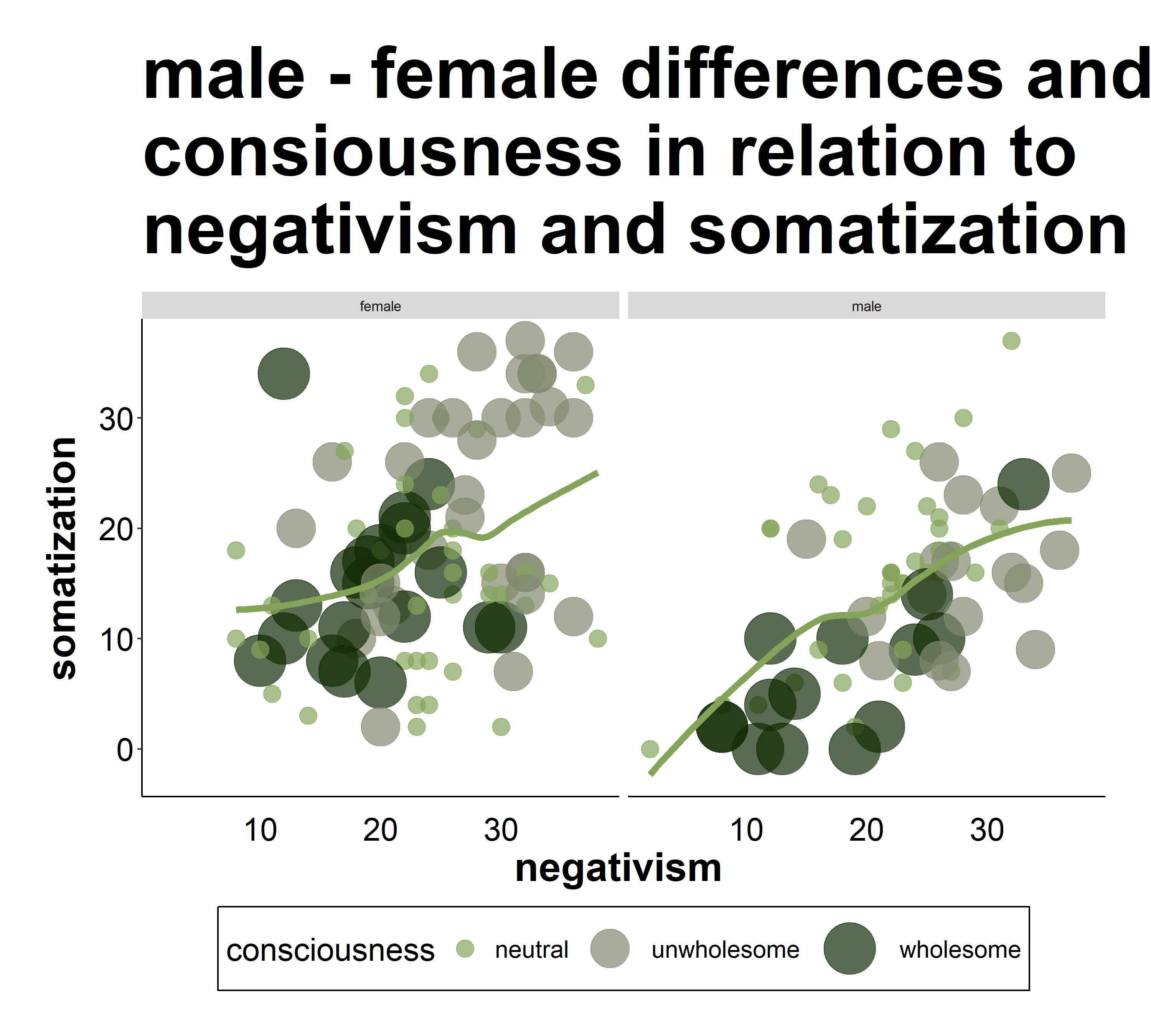
scatterplot male - female differences in consciousness in total nvm group
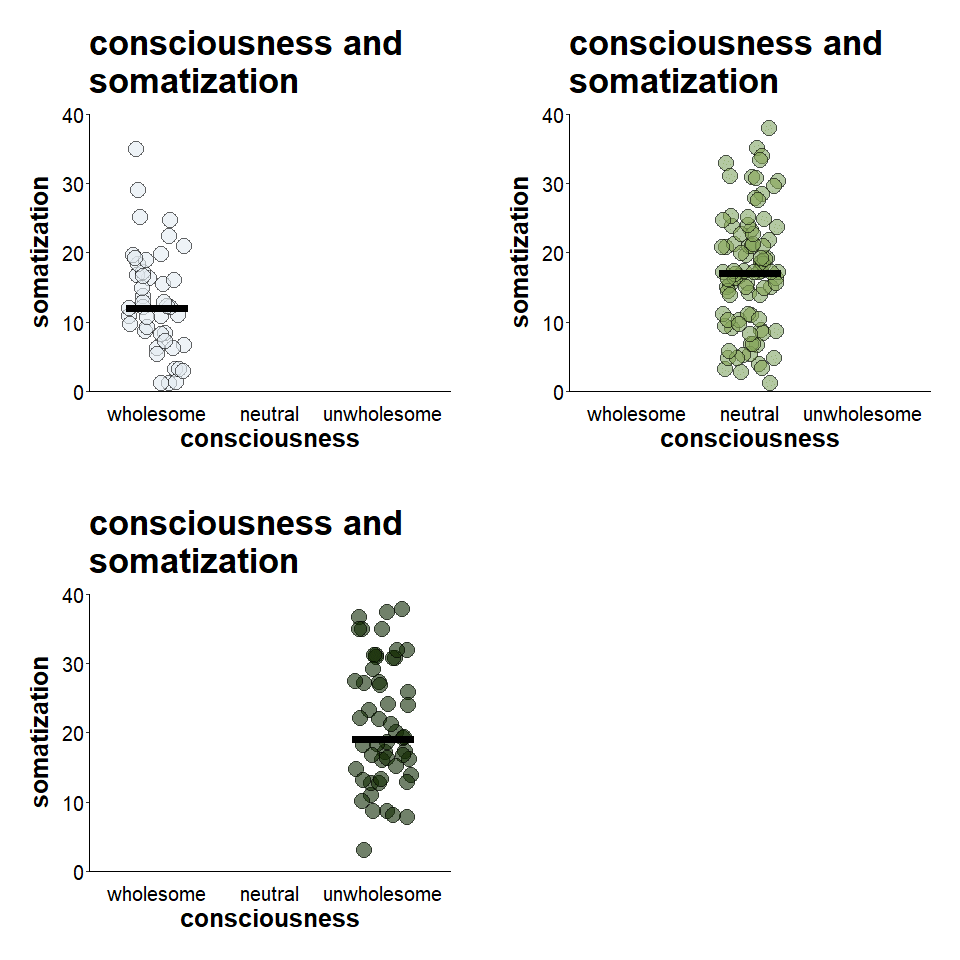
Animation consiousness and somatization in total nvm group
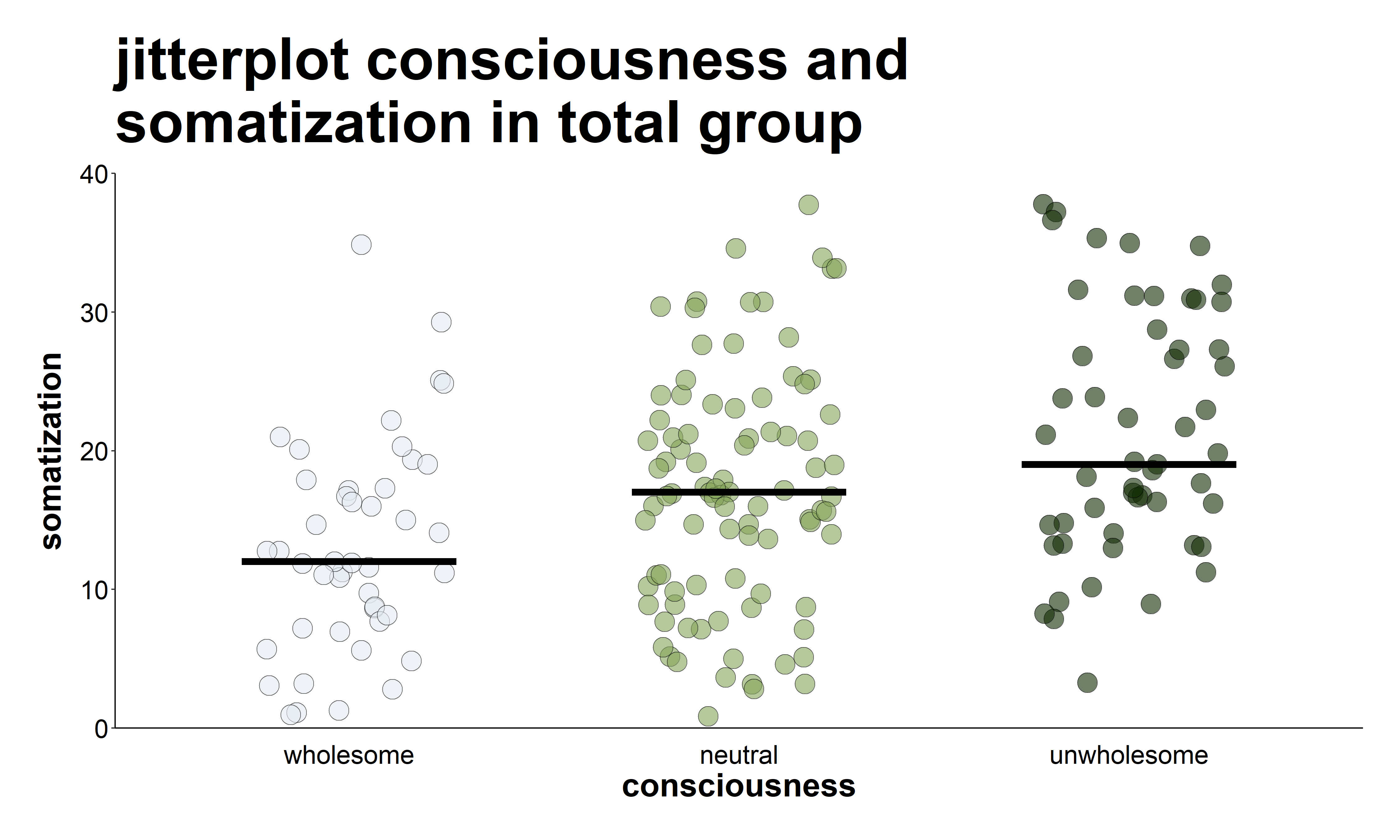
jitterplot of consciousness and somatization in total group
Conclusion
References
- Posted on:
- June 12, 2022
- Length:
- 2 minute read, 354 words
- See Also: